
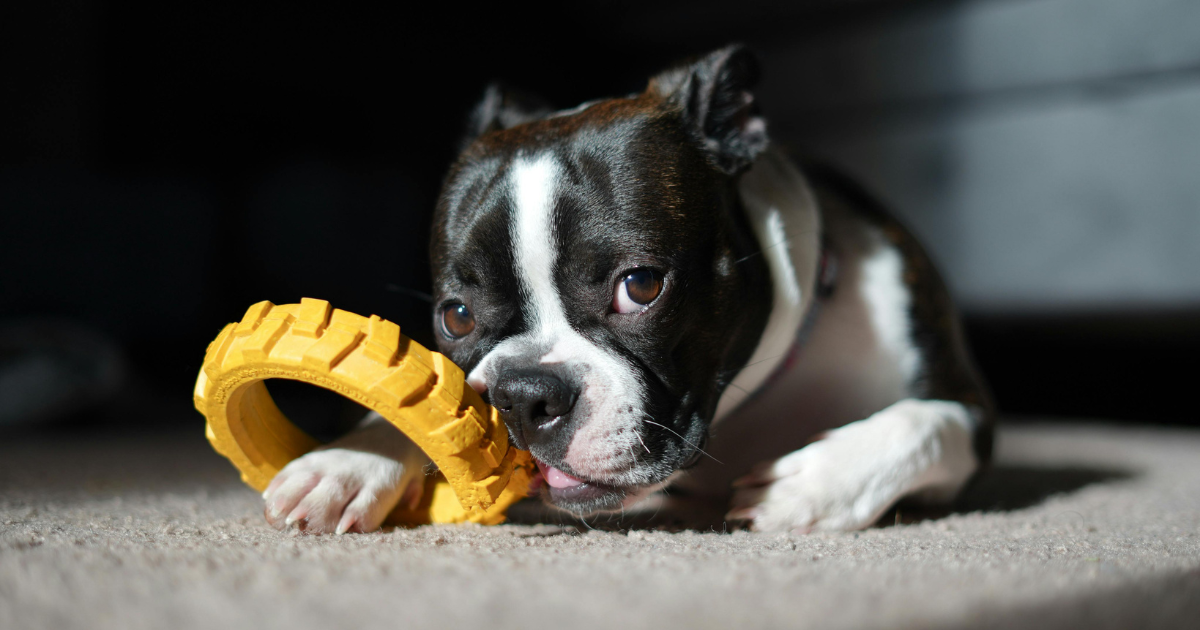
How can toys help to train your dog?
Training is a vital part of your your dog's development as well as a great way to strengthen the bond and relationship between you and your dog. Whether you've got a brand new pup and you're showing them the ropes, are settling an adopted dog into new routines and a happy home, or simply want to jazz up your dog's catalogue of impressive tricks, toys can act as the perfect incentive.
Finding the right toys
Balls, tug toys, treat toys, soft toys, frisbees and more - it can be overwhelming trying to find the right toy for your dog. It's a good idea to try out different toys that suit your dog's physical size, energy levels, age and ability, as this will allow you to see which toys your dog responds to.
Bonding
When we think about dog training, the first thing that can come to mind is spoken commands, routine-building and formal training sessions. But one of the most valuable things that comes as a by-product of training is the bonding that occurs between you and your dog. Active play, where dog owners remain engaged and central to their dog's playtime can strengthen their relationship. Having a safe and loving bond is fundamental to reducing your dog's anxieties and can mean they are more likely to listen and look up to you during training. Some toys that promote active play are tug toys and rope toys, and balls or frisbees which are perfect for games of fetch. Wrestling and playing with your dog really gets you and your dog on the same level.
Teaching specific skills
Toys are a fantastic way to boost enthusiasm during training. Whilst dog treats are also a good option, they can't be relied on all the time. Dog toys provide an exciting incentive, helping dogs to focus on commands and listen to recall if they learn that they will be rewarded with a toy when they follow through. Positioning toys as a reward for completing specific skills or tricks can be a really effective training method, especially if accompanied by praise and affirmations. For example, if teaching your dog to 'sit' and 'stay', the toy should be presented when your dog completes the command, along with a verbal affirmation such as 'yes!' or 'good dog!'.
Mental stimulation
Part of your dog's training will also include teaching them how to feel safe and comfortable on their own, and how they can entertain themselves without acting out or engaging in inappropriate behaviour. Interactive toys such as treat dispensers and slow feeders promote mental stimulation and reduce boredom. Whilst these toys can help to improve cognitive skills and require your dog to practice their problem-solving skills, they are also a great anxiety and stress aids. By keeping your dog engaged, they are simultaneously entertained and focussed on the toy rather than resorting to inappropriate behaviours such as chewing or barking.

Image: KONG Licks Spinz
Impulse control
Using toys during playtime can double up as an opportunity to teach impulse control. Using rope toys in games such as tug, coupled with commands such as 'drop it' or 'leave it', can help your dog learn how to contain their excitement and listen when highly energised/ stimulated. These cues will then come in handy in instances where your dog picks up something that is not meant for them!
Top tips for toys!
However you choose to train your dog, it is important that you remain consistent, and that the toys you use remain a reward. Toys will motivate your dog to engage with the cues you give them, so keeping toys stored away between training and play sessions avoids them losing their value; your dog will bounce with excitement each time the toys are brought out!
To shop dog toys, please click here.
To shop training accessories, please click here.

